
The Real Reason Celebrities Swear by Cold Showers for Better Skin

Cold finishes can create an instant post-shower radiance. Celebrities often point to that tightened, refreshed look as a quick trick. Yet true glowing skin depends on daily habits like moisturizing damp skin, using SPF, smart cleansing, and good nutrition.
This guide will separate what cold water can and cannot do. You will learn how to get glowing skin through a barrier-first routine, well-timed cleansing, targeted exfoliation, and consistent protection. Practical tips will match routines to skin type and lifestyle.
Short-term chill can enhance your immediate glow, but lasting improvement in appearance and complexion takes patience. Over time, hydration, diet, and avoiding smoke help restore tone. We’ll show how to make skin look smoother, set realistic expectations for time, and when to see a dermatologist.
Key Takeaways
- Cold water offers a temporary radiance but is not a cure-all.
- Daily habits—moisture, SPF, and gentle cleansing—build lasting results.
- Nutrition and hydration support long-term complexion health.
- Follow a barrier-first routine and add targeted actives as needed.
- Visible gains come with consistency; immediate tricks are short lived.
Why celebrities love cold showers—and what it really does for your skin
Celebrities often credit a quick cool rinse for that fresh, taut look right after a shower. Shorter, cooler showers can protect the barrier by avoiding the oil-stripping effects of long, hot exposure.
Perceived benefits include improved surface circulation and a more toned appearance. A cool finish can enhance post-shower radiance for a short while by supporting circulation and reducing temporary puffiness.
Still, cool water has limits. It won’t permanently shrink pores, erase fine lines, or make skin change long term. Genetics, oil control, and exfoliation are the true drivers of pore appearance and texture.
- Use a brief cool rinse after cleansing to preserve oils and reduce dullness.
- Avoid extremes—icy exposure is unnecessary and can cause discomfort.
- Think of cool finishes as a small booster within a full skincare program that includes sunscreen and consistent care.
How to get glowing skin: a science-backed routine that actually works
Start with a simple, evidence-based routine that protects the barrier while tackling dullness and uneven tone.
Find a cleansing routine that protects your barrier and balances oil
Wash your face in the morning, after sweating, and at night with a gentle cleanser. Choose a non-stripping formula that removes buildup without triggering compensatory oil production for your skin type.
Lock in moisture on damp skin to reduce dullness and dehydration
Apply moisturizer while the surface is still damp to lock in moisture. This small step improves absorption and helps prevent the tightness that causes lackluster tone.
Exfoliate away dead skin cells with gentle acids (AHAs, BHAs, PHAs)
Use low-concentration acid treatments—glycolic, lactic, or salicylic—to lift dead skin cells gradually. Start once or twice a week and increase only if the barrier tolerates it.
Never skip daily sunscreen to prevent photoaging and uneven tone
Wear broad-spectrum sunscreen (SPF 15 or higher) every morning, even on cloudy days. Sun protection is the single most important step to maintain tone and prevent damage.
Shower smarter: avoid very hot water and finish cooler to support skin
Shorten showers and lower the temperature to avoid stripping natural oils. A brief cool finish can refresh and help circulation without discomfort.
“Consistency beats perfection: small, daily habits compound into visible results over weeks.”

- Cleanse AM, post-workout, PM with a mild cleanser.
- Match product textures to your skin type to balance oil.
- Apply serums before creams and pat dry instead of rubbing.
Build your day-to-night skincare routine by skin type
Build a practical day-to-night routine that matches your skin type and daily demands. Focus on simple steps that protect the barrier in the morning and support repair at night.
Oily or breakout-prone
Use a non-comedogenic cleanser at night and after sweating to remove dirt and oil. Incorporate salicylic acid 2–4 times a week to clear pores without over-stripping.
Choose light gel moisturizers to balance hydration and keep the complexion matte during the day.
Dry skin
Layer a hyaluronic acid serum under a ceramide-rich cream and apply moisturizer on damp skin to lock in moisture. Cap exfoliation to 1–2 times weekly to avoid damaging the barrier.
Combination
Target the T-zone with oil-controlling formulas while adding richer creams to dry cheeks. Spot-exfoliate congestion-prone areas and keep other zones gentle.
Sensitive or mature
Prioritize a barrier-first routine: simple, fragrance-free products and patch-testing new actives. Introduce retinol slowly at night and buffer with moisturizer to reduce irritation.
- Day: light protection, sunscreen, and hydration.
- Night: richer textures and targeted actives for repair.
- Routine tip: adjust frequency of actives if you see irritation and give changes at least two weeks before reassessing.
“Daily cleansing at night helps remove debris like dirt, oil, and pollution that can clog pores and cause dullness.”
Ingredients and products that make skin glow—what to use and when
The right combination of antioxidants, acids, and moisturizers helps refine pores and even complexion. Choose reliable products with clear instructions and build a simple plan you can stick to.
Vitamin C serums work best in the morning. A stabilized vitamin formula boosts radiance and targets discoloration while supporting antioxidant defense. Follow with SPF for daytime protection.
Niacinamide pairs well with vitamin C to refine tone and minimize the look of pores. It supports the barrier and rarely increases irritation, so it fits many routines.
Retinol is a night treatment for texture and fine lines. Start 1–2 nights weekly, buffer with a hydrating serum, and increase slowly to avoid dryness or sensitivity.
- Acids (glycolic, lactic, salicylic) lift dead skin cells and smooth the complexion — schedule them weekly and avoid layering strong actives the same night.
- Hydrators like hyaluronic acid and ceramides restore moisture and counteract dehydration from actives.
- Sequencing: apply thinnest to thickest, use antioxidants by day and retinoids at night, and always wear SPF.
“Consistency and sensible sequencing deliver the best long-term appearance gains.”
Lifestyle habits that boost your glow from the inside out
Lifestyle choices are the quiet drivers behind lasting daytime radiance. Small changes to hydration, diet, sleep, and stress management help the body repair and maintain a healthy baseline.
Hydrate and fuel your body
Drink plain water and eat moisture-rich foods like cucumbers and oranges to reduce dehydration-related dullness. These choices support cell function and help retain surface moisture.
Nourish with antioxidants and healthy fats
Colorful fruits, vegetables, nuts, and omega-rich oils (fish, olive, avocado) supply antioxidants and vitamin precursors. This combination feeds cells and supports a balanced oil barrier from the inside.
Prioritize sleep and manage stress
Aim for 7–8 hours of sleep nightly so repair processes run uninterrupted. Short, daily practices—walks or breathwork—reduce stress and lower flare-ups that cause a fatigued look by day.
Small daily ways that add up
Gentle facial massage boosts circulation and lymphatic flow for a subtle radiance lift. Avoid cigarette and secondhand smoke to limit oxidative damage. Adjust product textures seasonally—richer at cold, lighter in heat—to match environmental needs.
“Consistent, small habits across diet, rest, and routine are the most reliable way to get glowing results over time.”
- Hydrate inside and out: water + moisture-rich produce.
- Eat antioxidant-rich foods and healthy oils for cell support.
- Sleep 7–8 hours and practice brief stress-reducing routines daily.
When to see a pro for next-level radiance
When over-the-counter steps plateau, professional treatments can provide targeted, predictable change. Board-certified dermatologists offer in-office options that address texture, pigmentation, and lines tied to age or cumulative sun exposure.
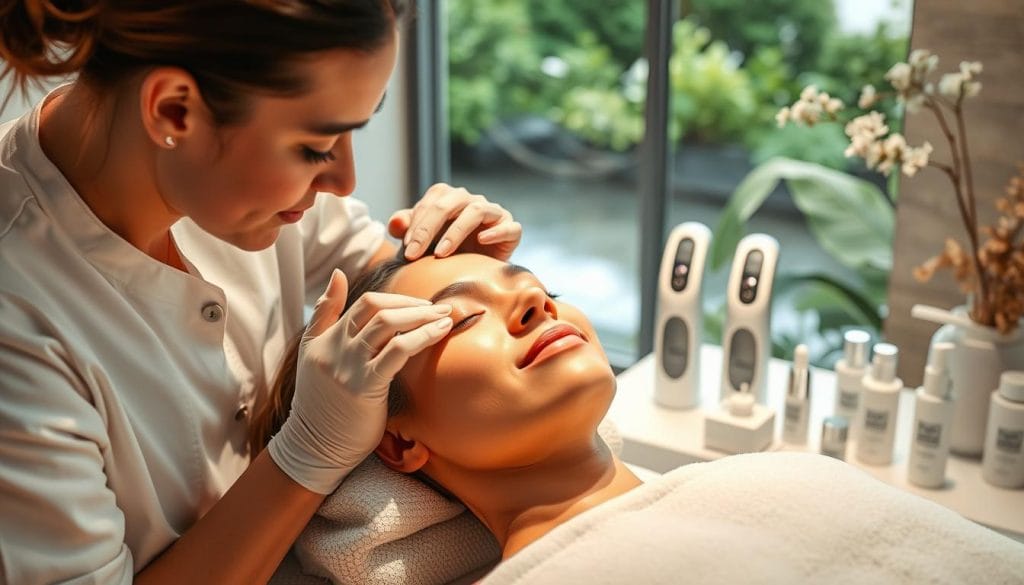
Chemical peels and laser options for texture, pigmentation, and fine lines
Chemical peels use acid solutions from superficial to medium depth to smooth texture and fade dark spots. Fractional and resurfacing lasers stimulate collagen to improve fine lines wrinkles, scars, and overall appearance.
Target stubborn dark spots and uneven tone with expert guidance
A dermatologist will match the procedure to your concern and skin type. Peels can lift pigment, while targeted lasers treat vessels and deeper discoloration more directly.
Safety, skin type considerations, and setting realistic timelines
Expect a treatment plan that balances benefit and risk. Many procedures require a series over weeks or months for best results. Allow time between sessions and watch for incremental improvement.
- Prepare: pause certain products before treatment as advised.
- Protect: strict sun avoidance and broad-spectrum SPF after procedures is vital to preserve results.
- Maintain: resume antioxidants by day and retinoids at night once healed to sustain gains.
“Choose board-certified providers to ensure safety, tailored protocols, and realistic expectations.”
Conclusion
strong, Focus on a realistic routine that fits your life and you will see steady results. Anchor your plan: cleanse smartly, exfoliate gently, lock in moisture on damp skin, and use daily SPF to protect against the sun.
Layer for day and night—antioxidants and sunscreen in the morning; repair and richer care at night. Support this with water, whole foods, 7–8 hours of sleep, and simple stress management to reduce dullness and help overall appearance.
Give changes time. Track progress over weeks, not days, and tweak products that match your goals. If fine lines or stubborn spots persist, consult a board-certified dermatologist about peels or lasers to complement your plan.
Keep it simple, stay consistent, and choose a way forward you enjoy to truly get glowing skin.
FAQ
Why do celebrities recommend cold showers for better skin?
Cold water can temporarily tighten the surface, reduce puffiness after sleep, and create the perception of a more toned appearance. It also improves circulation briefly, which can boost post-shower radiance without adding products.
Can a cold rinse reduce fine lines or shrink pores long-term?
No. Cold water gives short-lived firmness but cannot erase fine lines, permanently shrink pores, or replace treatments like retinoids or professional procedures that influence cell turnover and collagen.
How should I build a daily routine that protects my barrier and balances oil?
Use a gentle, pH-balanced cleanser suitable for your type, avoid over-washing, and follow with a lightweight moisturizer or richer cream depending on needs. Include niacinamide and ceramides to support the barrier and regulate oil production.
What’s the best way to lock in moisture to reduce dullness and dehydration?
Apply a hydrating serum with hyaluronic acid to damp skin, then seal with a moisturizer containing emollients or ceramides. Layering while skin is slightly wet maximizes water retention and improves overall texture.
How often should I exfoliate dead cells with acids?
Start gently: once or twice weekly for most people. Use AHAs like glycolic or lactic for surface renewal, BHAs such as salicylic acid for oilier areas, and PHAs for sensitive types. Increase frequency only if skin tolerates it without redness or irritation.
Is sunscreen really necessary daily, even if I shower with cold water?
Yes. Daily broad-spectrum SPF prevents photoaging, dark spots, and uneven tone. Cold showers don’t protect against UV damage; sunscreen is the single most powerful preventive step for long-term complexion health.
What shower temperature is best for healthy complexion?
Avoid very hot water. Warm showers cleanse effectively without stripping oils; finish with a cooler rinse if you enjoy it. Hot water can dehydrate the surface, worsen redness, and compromise the barrier.
How do I adapt a routine for oily or breakout-prone areas?
Use a gentle foaming or gel cleanser, non-comedogenic moisturizer, and targeted exfoliation with salicylic acid. Lightweight formulations and oil-free sunscreens help manage excess sebum without over-drying.
What should someone with dry skin prioritize night and day?
Choose richer creams with ceramides and occlusives, incorporate hyaluronic acid serums, and avoid excessive exfoliation. Use nourishing oils or barrier-repair products at night to restore moisture and reduce flakiness.
How can combination skin be treated effectively?
Tailor products by zone: treat oily T-zone with lighter hydrators and targeted acids, while applying richer creams to dry cheeks. Spot treatment and multi-step layering let you balance hydration without clogging pores.
What do sensitive or mature types need to focus on?
Prioritize barrier repair with ceramides, gentle cleansers, and minimal actives. Introduce retinol and acids slowly and use sunscreen daily. Look for formulas labeled for sensitive or mature use and patch-test new products.
Which antioxidants work best for radiance and dark spots?
Vitamin C is a top choice for brightening and antioxidant support. Pair it with vitamin E or ferulic acid for stability. Regular use can help fade uneven tone when combined with sunscreen.
How should I use niacinamide and what does it do?
Niacinamide refines tone, minimizes the look of pores, and strengthens the barrier. Use it in serums or moisturizers once or twice daily; it pairs well with most actives and is suitable for many types.
When is retinol appropriate and how do I avoid irritation?
Use retinol at night for texture improvement and fine line reduction. Start with a low concentration, apply every other night, and build tolerance. Combine with moisturizers and avoid layering strong acids the same night to reduce irritation.
Which acids are most effective for a smoother complexion?
Glycolic and lactic acids (AHAs) brighten and smooth surface texture; salicylic acid (BHA) penetrates pores to help with congestion. Choose acid types based on tolerance and target concerns, and always follow with sun protection.
What hydration ingredients should I look for?
Hyaluronic acid attracts and holds moisture; ceramides repair and maintain the barrier. Use both in combination: hyaluronic serums topped with ceramide-rich creams for lasting hydration.
How much does diet and water intake matter for the complexion?
Hydration and a nutrient-rich diet support cellular health. Water, fruits, vegetables, and healthy fats provide vitamins and antioxidants that help protect cells and improve overall appearance.
Can sleep and stress affect my appearance?
Yes. Poor sleep and chronic stress increase inflammation, worsen dullness, and can trigger breakouts. Prioritize sleep hygiene and stress management to support recovery and reduce flare-ups.
Are facial massage and avoiding smoke really helpful?
Facial massage can boost circulation and product absorption when done gently. Avoiding tobacco and limiting alcohol reduces oxidative stress and helps maintain tone and color.
When should I consult a professional for treatments like peels or lasers?
See a board-certified dermatologist or licensed aesthetician for persistent texture issues, deep pigmentation, or stubborn lines. Professionals evaluate skin type, recommend appropriate procedures, and set realistic timelines for results.
What risks should I consider before in-office procedures?
Consider skin type, healing capacity, and potential downtime. Discuss possible side effects, pre- and post-care, and alternatives. A qualified provider will tailor treatments to minimize risks and optimize outcomes.


