
The Evolution of Superheroes: From Golden Age to Today
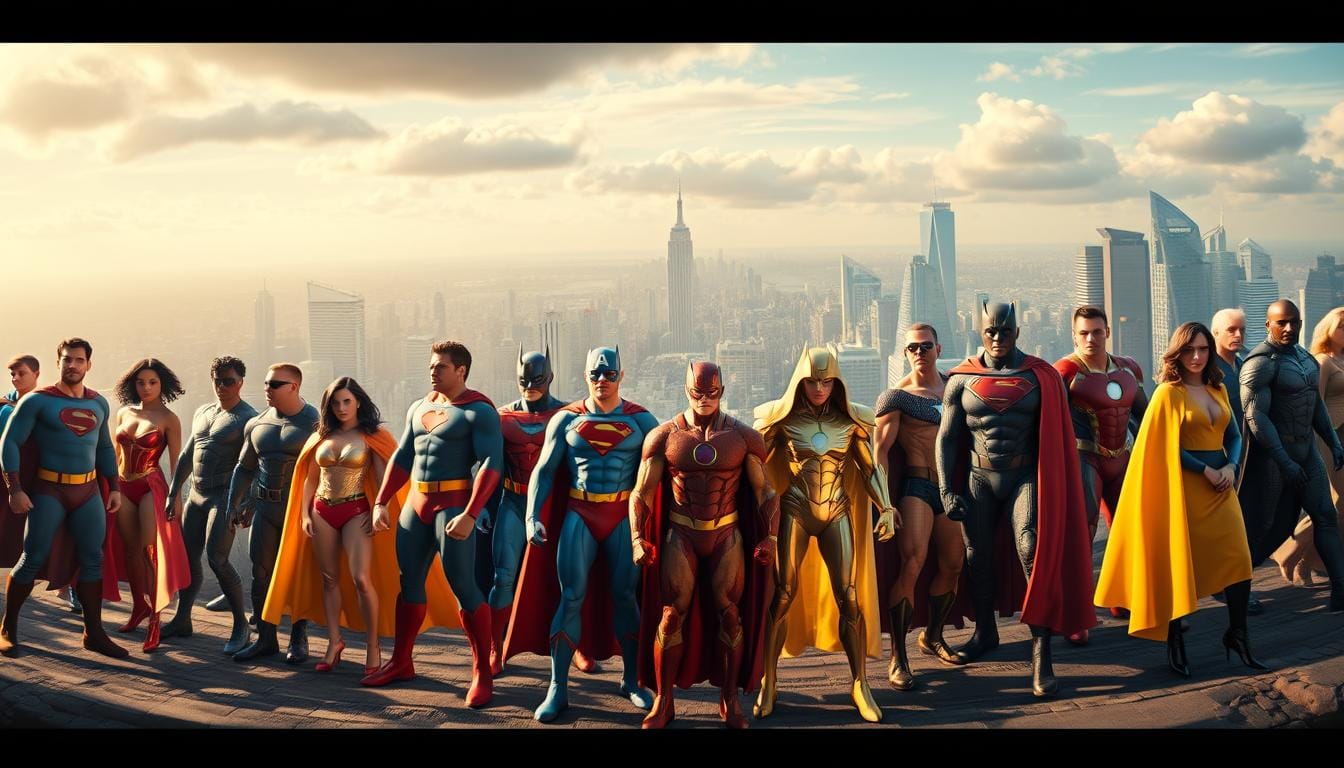
This Ultimate Guide maps the long history behind modern heroes. It shows how myth and 1920s pulp gave rise to comic book icons and how those heroes moved from pages to radio, film, TV, and games.
We trace key ages — Stone, Golden, Silver, Bronze, Dark, and Modern — to explain shifts in tone, industry, and audience habits. Each era reveals trends in costume, mission, and the characters readers follow.
The guide highlights how early radio serials and later tie-ins shaped canon, and how comic books and adaptations now influence one another. Expect focused takes on signature heroes, major creators, and turning points that shaped wider culture and the entertainment world.
Readers new and old will find clear context for power scaling, canon choices, and why publishers reboot, retcon, and revive titles to sustain success over time.
Key Takeaways
- The guide outlines the major ages that define this field and why they matter.
- It links mythic roots and pulp adventures to modern comics and films.
- Transmedia events — from radio to MMOs — shaped on-page canon early.
- Adaptations now feed back into books, influencing design and casting.
- Coverage focuses on landmark works, creators, and evidence-based turning points.
- Readers’ tastes help drive publisher decisions and long-term success.
Origins and Definitions: How Superheroes Emerged from Comics, Myth, and Pulp
Mythic tales and 1920s pulp adventures fed the first modern costumed crimefighters long before they landed in comic-book panels. These early figures mixed archetypal roles—protectors, tricksters, and larger-than-life champions—with serialized pulp plots that rewarded regular readership.
From myth and pulp to comic book icons: defining the superhero
The superhero is best seen as a synthesis: mythic archetypes, pulp adventurers, and masked crimefighters consolidated into a distinct form with Superman’s 1938 debut in a comic book. Precursors like Dr. Occult, the Phantom, the Green Hornet, and the Crimson Avenger supplied visuals and mission-driven plots later refined in comics.
Mapping the ages: Stone, Golden, Silver, Bronze, Dark, and Modern
Scholars use period labels—Stone (pre-1938), Golden, Silver, Bronze, Dark, and Modern—to track shifts in tone, audience, and publishing. These ages mark moves from light, serial stories to denser continuity and multimedia ties that complicate canonicity.
- Why it matters: Periodization helps fans and creators spot cultural and economic drivers behind changes in stories and character treatment.
- Core elements: Secret identities, icons, and moral codes let these figures travel across time and culture.
Creatorsand publishers continually test boundaries, expanding representation and blending genres while readers learn to reconcile multiple timelines and media versions.
The Golden Age: Ideals, Wartime Stories, and the First Multimedia Heroes
The Golden Age began when Superman’s 1938 arrival and Batman’s 1939 follow-up set a clear visual and moral template for comic book tales.
These early figures favored bold costumes, clear goals, and serialized cliffhangers. That format made the new superhero model easy to copy and easy to sell.
Foundations and marquee characters
Superman and Batman established iconic imagery and crisp moral codes that guided many later characters. Timely’s Human Torch and Namor added energy and variety that hinted at future innovation.
Wartime pivot and mass reach
By 1941, Captain America fought Axis villains while Wonder Woman mixed myth and patriotism. Stories shifted from crime tales to World War battles and patriotic drama.

Transmedia growth and decline
Radio shows and serials made these figures household names; Kryptonite actually first appeared on radio. Yet distribution changes, television, and the Comics Code narrowed the field.
- Villain-of-the-week plots and reset endings kept stories accessible.
- Many age comics characters vanished; a few — Superman, Batman, Wonder Woman — endured.
- This era laid the groundwork for later films, series, and multimedia franchising.
The Silver Age: Science, Marvel’s Human Touch, and the Rise of Continuity
As space-age optimism rose, writers rewired classic figures with science-driven origins and cosmic stakes.
Science and spectacle led many reinventions. New versions of the Flash and Green Lantern traded mystic roots for lab tests, radiation, and satellites. These stories mirrored Cold War hopes and fears in accessible comic book form.
Marvel Comics changed the tone by giving heroes real problems at home. The Fantastic Four felt like a family. Spider-Man balance school, rent, and responsibility. Iron Man, the X-Men, and the Hulk added moral conflict and identity struggles to the action.
Continuity expanded across titles. Creators linked issues, staged crossovers, and let setbacks carry weight. That long-form approach demanded steady reader attention and shaped later films and shared universes.
“Heroes began to lose neat endings; consequences stuck with them.”
The 1960s also showed contrast: TV series kept things episodic and camp, while comic books pushed serialized character arcs. This blend widened the genre’s emotional range and prepared readers for more mature stories.
From Bronze to Dark Age: Social Realism, Antiheroes, and the 1990s Shake-Up
A shift toward gritty realism pushed comic book heroes into stories about social ills and moral ambiguity.
Bronze Age titles like Green Lantern/Green Arrow used the superhero frame to tackle racism, pollution, and drug abuse. These plotlines made comics feel more relevant to readers and the wider culture.
Hard-traveling heroes and real-world issues
Creators used grounded plots to show how heroes react to political and social crises. The stories kept action but added clear moral stakes.
Code changes, horror, and new diversity
The 1971 Comics Code revision opened a door to darker tones. Swamp Thing and Ghost Rider mixed horror with heroics.
Diverse characters like Luke Cage, Storm, and Wolverine shifted team dynamics and broadened who could be a favorite hero.
Deconstruction and gritty reboots
Watchmen and The Dark Knight Returns questioned the moral clarity of earlier ages. Crisis on Infinite Earths reset continuity while Batman: Year One showed how street-level strength could reshape a character.
“These stories reframed what a superhero could mean in a less certain world.”
Speculation, stunts, and indie pressure
The 1990s speculation boom produced headline events: Death of Superman, Knightfall, and the rise of Venom. These drove short-term success but also market saturation.

| Trend | Example | Impact |
|---|---|---|
| Social realism | Green Lantern/Green Arrow | Broadened themes; more adult readers |
| Horror & mature tone | Swamp Thing, Ghost Rider | Genre hybridization; darker stories accepted |
| Diversity & antiheroes | Luke Cage, Wolverine, Punisher | New fanbases; more complex characters |
| Speculation events | Death of Superman, Knightfall | Sales spikes; long-term market strain |
| Indie/Imprint rise | Image, Milestone, Vertigo | Creator ownership; mature-reader markets |
- Tim Burton’s Batman sparked renewed film interest.
- Batman & Robin’s backlash showed limits for camp in movies.
- The period set a bridge to multimedia strategies that follow in the Modern Era.
The evolution of superheroes in the Modern Era: Crossovers, Cinematic Universes, and the Digital Shift
Modern storytelling ties politics, legacy heroes, and transmedia into a single creative and commercial pattern.
Post-9/11 politics pushed comic books toward sharper debate. Marvel’s Civil War questioned oversight and freedom. Publishers used charity issues and overt themes to respond to real-world grief and policy debates.
Post-9/11 complexity and atemporality
Creators use atemporality to keep characters current. Fictional events like the Siangong War let long-running characters stay relevant without fixed dates.
Legacy and reinvention
New mantles widened readership. Miles Morales and Kamala Khan refreshed iconic names while bringing diverse voices into flagship stories.
MCU feedback loop
The big screen success starting with Iron Man changed priorities. Films shaped visual designs and casting choices. Nick Fury’s comic redesign aligned with Samuel L. Jackson’s portrayal, showing how movies feed back into comics and books.
Games and digital worlds
Interactive titles—from Marvel vs. Capcom to City of Heroes, DC Universe Online, and Marvel Snap—expanded reach and gave fans new ways to live these characters.
Managing power scales and canon
Power inflation forces careful story choices. Scarlet Witch’s arcs and loose ranking of god-tier beings keep ensemble balance and preserve stakes across series.
“Films and games now define how publishers pace comics, shaping everything from tie-ins to long-term character arcs.”
| Area | Example | Impact | Notes |
|---|---|---|---|
| Politics in stories | Civil War | Public debate on oversight; darker themes | Post-9/11 context |
| Legacy heroes | Miles Morales, Kamala Khan | Broader representation; new readers | Maintains brand familiarity |
| Film-to-comics feedback | Iron Man → MCU; Nick Fury redesign | Unified visuals; marketing synergy | Boosts sales and recognition |
| Digital & interactive | Marvel vs. Capcom; MMOs; Marvel Snap | Expanded audiences; social play | Drives transmedia success |
Creators now juggle canon, continuity resets, and new platforms to keep favorite heroes timely. This era links cultural meaning and commercial success across film, games, and comics while still leaving room for fresh stories.
Conclusion
Across decades, comic book heroes adapted to new audiences while keeping core symbols that readers recognize. The golden age and silver age set visual language and moral anchors that let later creators retool characters for modern concerns. Flagship names — Captain America, Wonder Woman, the Fantastic Four, and Captain Marvel — keep continuity steady while inviting fresh takes.
Comic books and related books remain the lab where ideas hatch and later scale into films, movies, and games. The 1990s taught the industry how events can both boost sales and strain trust. Today, marvel comics balance power, strength, and psychology so ensemble casts stay lively. Look to the next years for new formats, but the core appeal of the superhero — clear iconography plus human story — will keep drawing audiences.
FAQ
What defines a superhero and how did they first appear in comics and pulp?
A superhero combines extraordinary abilities or skills with a moral mission, distinctive costume, and a recognizable alter ego. Early roots trace to myth and pulps like The Shadow and Doc Savage. Comics in the late 1930s crystallized the form when creators added serialized storytelling, striking visuals, and modern urban settings—turning archetypes into marketable characters such as Superman and Batman.
How did the Golden Age shape the public image of heroes?
The Golden Age set core templates: clear moral codes, patriotic themes, and mass appeal through comics, radio, and film serials. Characters like Captain America and Wonder Woman embodied wartime ideals, while the period introduced transmedia storytelling and merchandising that made heroes part of everyday culture.
What changed during the Silver Age and why is Marvel’s approach important?
The Silver Age brought science-based origins, greater continuity, and more complex characterization. DC revitalized legacy heroes like Flash and Green Lantern with a sci-fi bent. Marvel, led by creators such as Stan Lee and Jack Kirby, introduced flawed, humanized heroes—Spider-Man, Fantastic Four, and Iron Man—whose personal problems resonated with readers and altered tone across the industry.
How did social issues and darker storytelling affect comics from the Bronze Age onward?
Creators began tackling racism, addiction, and politics, reflecting cultural shifts. Stories grew grimmer and more realistic: Watchmen and The Dark Knight Returns questioned heroism itself. The industry also saw expanded diversity with characters like Luke Cage, Storm, and new creators from indie and imprint scenes producing mature, genre-blending work.
What role did the Comics Code and market speculation play in the medium’s history?
The Comics Code Authority curbed violent and adult content for decades, steering publishers toward safer material. Later, changes to the Code and direct-market distribution allowed edgier stories. In the 1990s, speculation and blockbuster stunts—Death of Superman, major character deaths—distorted markets, leading to a reset and rise of new publishers like Image and Milestone.
How have films and cinematic universes influenced comic-book storytelling?
Success on the big screen shifted cross-media priorities. The Marvel Cinematic Universe created feedback loops: cinematic casting and tone influenced comic portrayals, while films boosted character popularity and sales. Movie-driven continuity pushed comics to align with broader audiences and reimagine origins for new viewers.
In what ways has diversity and legacy mentorship changed modern comic rosters?
Publishers expanded representation by introducing legacy heroes and new identities: Miles Morales as Spider-Man and Kamala Khan as Ms. Marvel show generational and cultural reinvention. These changes broaden readership and open story opportunities that reflect contemporary communities and concerns.
How do modern creators balance ‘god-tier’ characters and narrative stakes?
Writers manage cosmic or omnipotent figures by focusing on character-driven conflicts, moral dilemmas, and scaled threats that emphasize consequence rather than raw power. Editorial guidelines, event planning, and clear limitations in canon help maintain dramatic tension and reader investment.
What impact have video games and digital platforms had on superhero culture?
Games and digital titles like Marvel vs. Capcom, City of Heroes, and Marvel Snap broaden engagement, letting fans interact with characters and worlds. Digital distribution also enables serialized comics, webcomics, and indie projects, creating new discovery paths and monetization models outside traditional print.
How did post-9/11 themes change super-heroic storytelling?
After 9/11, narratives grew more complex and politically aware. Stories such as Civil War examined surveillance, civil liberties, and the cost of security, often adopting atemporal continuity to handle sensitive topics. The shift prompted nuanced takes on authority, accountability, and the consequences of vigilantism.
Which creators and books are essential for someone studying this history?
Key creators include Jerry Siegel and Joe Shuster, Bob Kane and Bill Finger, Stan Lee, Jack Kirby, Steve Ditko, Alan Moore, Frank Miller, and modern voices like Brian Michael Bendis and Ta-Nehisi Coates. Foundational titles span Action Comics #1, Detective Comics, Fantastic Four, Amazing Fantasy #15, Watchmen, The Dark Knight Returns, and influential runs across Vertigo and Image imprints.
How have distribution and audience expectations shifted from the Golden Age to today?
Distribution moved from newsstands to the direct-market comic shop and now to digital platforms. Audiences expect more diverse creators, inclusive characters, and multimedia tie-ins. Publishers respond with event-driven series, trade paperbacks for new readers, and transmedia strategies that link comics to film, TV, and games.


