
Is AI the Next Comic Book Artist?
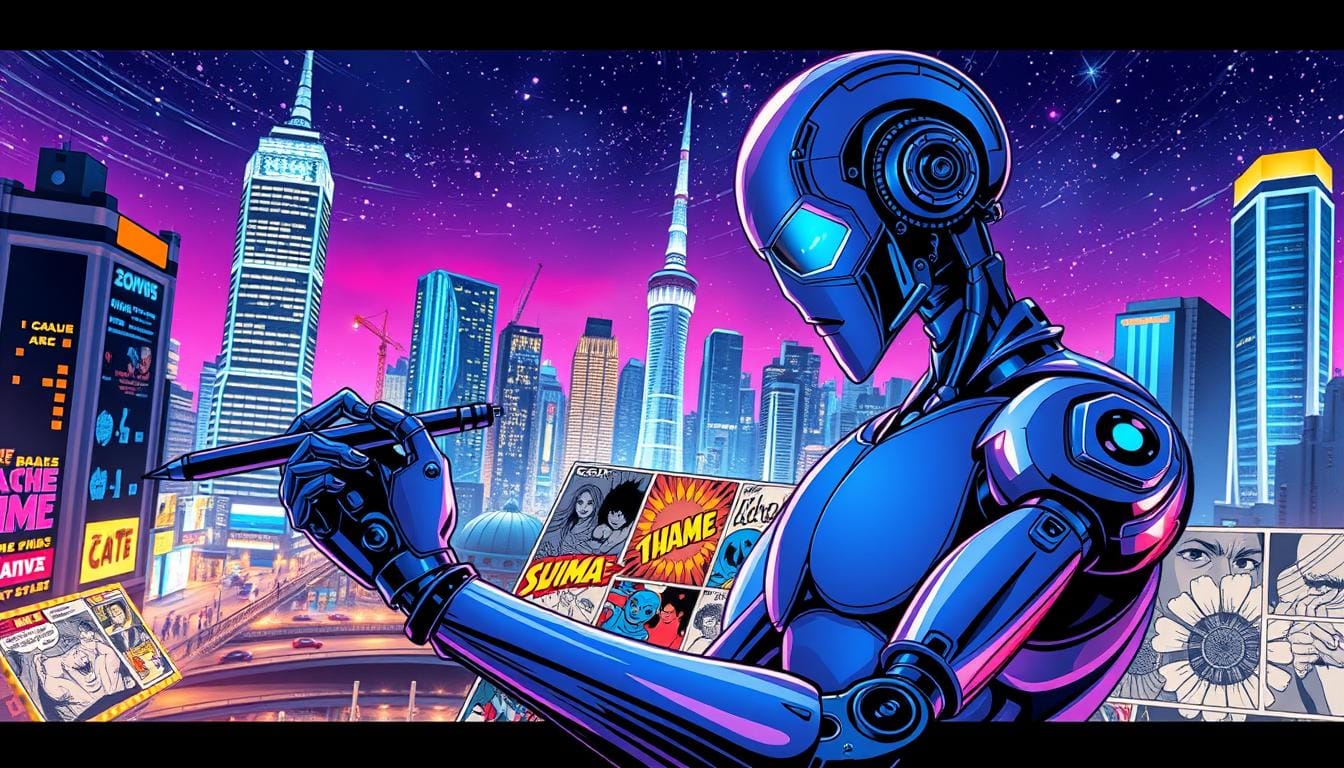
For creators and publishers in the United States, a quiet shift has reshaped how stories reach readers. Over recent years artificial intelligence and adjacent technology moved from nearby creative fields into the comic world and changed expectations for speed, collaboration, and market reach.
The trend touches every stage of the process: writers use tools for script ideation, generative systems sketch panels, and platforms tune marketing for specific audiences. This boosts time to market and lets small teams compete with larger studios, while also raising tough questions about ownership and authenticity.
This report focuses on how creators, publishers, and platforms are adapting today and what that means for the future of art and story. We will track practical uses, risks, and the point at which technology enhances—or risks undermining—trust between artists and readers.
Key Takeaways
- Practical upgrades: Tools speed writing, layout, and lettering to cut production time.
- Access: Lower technical barriers let more creators publish work.
- Market impact: Recommendation systems improve targeting and distribution.
- Legal risk: Ownership and copyright questions need clear answers.
- No single path: Adoption will vary by team size, goals, and risk tolerance.
The state of AI in the comic book industry: workflows, speed, and access
New tooling has reshaped how writers and artists move from concept to finished pages. Creators gain speed across drafting, art tests, lettering, and marketing while keeping human oversight.
From beats to script
Writers use GPT-like systems to turn outlines into beat sheets, tighten pacing, and generate dialogue. This frees time for voice and character work while the process handles early drafts.
Generative artwork and comps
Artists and creators deploy image generators for composition, camera angles, lighting, and style tests for panels and backgrounds. Outputs are refined by hand to meet quality goals.
Lettering, layout, and production
Automated lettering tools place word balloons to avoid tangents and balance negative space. That preserves reading order and cuts hours from page prep.
- Faster cycles: Indie teams ship issues sooner and sustain a series cadence without dropping page quality.
- Market reach: Recommendation engines and pricing tools match books to readers, helping publishers build backlists.
- Access: Translation and accessibility features open new markets and lower entry barriers for new creators.
ai in comics: creator pushback, ethical risks, and authenticity concerns
Creators and fans have raised urgent questions about how new tools reshape authorship and trust.
Community voices on devalued creativity and style mimicry without consent
Many artists and people across publishing fear that unconsented training erodes creativity. Chloe Starling warns that publishers could feed an author’s book or books into models to imitate a particular artist’s kind of style.
This risks turning unique work into a reproducible commodity. Aviv Or adds that scraping peers’ artwork without permission violates norms and still misses pacing and acting—the emotional beats that sell a story.
Fakes and “lost stories”: the risk of distorted records and eroding trust
Adam Karenina Sherif warns about fabricated “lost” pieces that look real enough to confuse readers and historians.
David Robertson notes teens proudly showing generated art, a sign that cultural norms may shift toward speed over craft.
Publisher scrutiny and copyright: DC allegations, detection limits, and ownership threats
Joey Esposito argues that replacing collaboration with approximations strips meaning from each piece of a page. The music example shows how training on catalogs without consent can undermine creators across the world.
- Core point: People feel identity and livelihood are at risk when training uses prior work without consent.
- Process matters: Calls for transparency, documentation, and enforceable standards aim to protect provenance and trust.
Industry implications in the U.S.: opportunity, quality control, and the path forward
Market insights increasingly steer editorial bets, but the writer’s judgment still decides emotional truth.
Personalization and trend-led content
Publishers can use audience data to shape which comic and comic book ideas get greenlit. Targeting helps pick series that match readers’ tastes.
Still, a writer must translate trends into stories that feel real. Personalization should inform choices, not replace craft.
Labor, cost, and the “money people” problem
Money pressures push teams toward tools that cut page time and reduce costs. That can speed publishing but risks lowering artistic standards.
Clear contracts and review checklists help balance efficiency with integrity.
Quality limits and verification culture
High-profile scrutiny—such as allegations over DC comic book panels—shows why process proof matters.
Artists posting short process clips and publishers seeking layered files respond to worries about inconsistent anatomy and low-resolution painted panels.
Practical steps and legal risk
- Adopt timestamped WIP files and layered originals for each panel.
- Define policies that separate ideation tools from final artwork.
- Require clauses about ownership to reduce copyright gaps for books and catalogs.
In short, the future will blend selective automation with stronger human oversight. That mix protects quality, artist rights, and the long-term value of the comic book catalog.

Conclusion
Faster production tools have rewritten daily routines for artists, but they have not replaced the choices that make each work unique.
Artists, creators, and writers can use tools for ideation and mechanics while keeping human judgment on story beats, pacing, and final art decisions. This preserves the soul of each piece and protects craft.
People across the industry want clear standards on data use, provenance, and documentation. Publishers should require layered files, WIP artifacts, and enforceable acceptable-use policies so ownership and livelihoods stay secure.
The likely path is hybrid: artists guide tools, editors learn to spot issues, and platforms still tune discovery. Media personalization will shape reach, but the best content keeps a human voice at its center.
Adopt transparency now so that years from today the industry’s innovations strengthen the bond between creators and readers.
FAQ
Is AI the next comic book artist?
New tools like GPT-style assistants and image generators can speed up concepting, scripting, and visual exploration. They help writers draft beats and artists test styles, but most professionals treat them as collaborators rather than replacements. Human judgment still guides story, pacing, and emotional nuance.
How are workflows changing across writing, art, and production?
Workflows now blend traditional steps with automated ones. Writers use text models to outline arcs and dialogue. Image systems generate thumbnails and backgrounds for rapid iteration. Lettering tools improve legibility and panel flow. This reduces repetitive tasks and shortens production cycles for both indie creators and publishers.
Can GPT-like tools really help with scriptwriting and world-building?
Yes. These tools suggest plot beats, flesh out character details, and propose dialogue options. They speed brainstorming and resolve writer’s block, but creators refine outputs heavily to keep voice and coherence. The best results come from human editing and clear prompts.
Do generative image tools produce usable panels and backgrounds?
Generators like DALL·E and MidJourney can create useful references, mood studies, and experimental panels. They’re strong for background ideas and style exploration, but outputs often need cleanup, compositing, and consistent character design from an artist to meet publication standards.
How do automation tools affect lettering and panel layout?
Automated lettering optimizes size, spacing, and readability, speeding page prep. Layout assistants suggest panel rhythm to improve pacing. Creators still check flow manually to preserve narrative emphasis and clarity, especially for complex scenes.
Will faster production cycles reduce quality for indie creators?
Faster cycles let small teams produce more issues and test concepts without huge budgets. Quality depends on oversight: careful editing, consistent art direction, and time for revisions remain essential. Scaling without standards risks uneven work, but many indie teams use tools to boost, not replace, craft.
How do these technologies change marketing and distribution?
Recommendation engines and analytics refine audience targeting and pricing. Creators use data to time releases, craft pitches, and tailor covers. That helps reach readers more efficiently, but it can also encourage trend-chasing over long-term creative investment.
Can these tools improve accessibility and translation for global readers?
Yes. Machine translation and speech-to-text reduce barriers, enabling creators to offer editions in multiple languages and accessible formats. Human review is still vital to preserve idiom, tone, and cultural nuance in dialogue and captions.
What are the main ethical concerns creators raise?
Many artists worry about style mimicry without consent, devaluation of craft, and models trained on copyrighted work. Community pushback focuses on consent, attribution, and fair compensation. Transparent policies and opt-out mechanisms are central to addressing these concerns.
How real is the risk of fake or altered works distorting the record?
Deepfakes and falsified pages can undermine trust and historical records. Publishers and creators increasingly rely on provenance tools, watermarks, and verification workflows—like posting process videos or WIP proofs—to prove authenticity and protect reputations.
What legal pressures are publishers facing around training data and ownership?
Lawsuits and public scrutiny target models trained on copyrighted comics and art. Companies such as DC and other major publishers are scrutinizing detection limits and ownership claims. Legal outcomes will shape licensing norms, model training practices, and creator rights.
How will personalization and data-driven trends affect storytelling?
Audience insights help tailor characters, themes, and release strategies to reader preferences. That enables niche series to find markets but may push some projects toward algorithm-driven trends. Balancing creative risk with data-informed choices will be an industry challenge.
What about labor, costs, and the “money people” problem?
Tools can cut production costs, which appeals to publishers and investors. That raises concerns about reducing staffing and underpaying creatives. Sustainable adoption requires fair contracts, clear crediting, and investment in human talent alongside tools.
Do automated systems limit storytelling quality or originality?
Automated outputs can feel generic without strong human direction. Pacing, emotional beats, and inventive layouts remain strengths of skilled creators. Tools augment craft but don’t replace the judgment that shapes memorable sequential art.
How can creators and publishers verify that work is authentic and ethically produced?
Best practices include sharing work-in-progress, keeping editable source files, using provenance metadata, and adopting transparent licensing for training material. Verification culture—process videos and documented workflows—helps build reader trust and industry standards.


