
Why You Should Stop Over Exfoliating Right Now

Exfoliation can reveal smoother skin, but many people push this step too far.
Dermatologists warn that frequent scrubs, toners, and serums stack and harm the skin barrier. If your face shows peeling, dryness, or breakouts, pause and simplify your routine. Experts like Dr. Aanand Geria recommend limiting treatment to one or two times per week and stopping immediately when irritation appears.
Recovery can take a full cell cycle — about 28 days — so the safest path is calm, supportive care. This guide will show how to spot early signs, halt triggering products, and rebuild a gentle routine that protects your skin while keeping results consistent.
Key Takeaways
- Stop and simplify if you see redness, peeling, or sensitivity.
- Limit active treatment to one or two times per week as a rule of thumb.
- Avoid stacking physical and chemical methods on the same day.
- Restore the skin barrier with gentle products and patience for 28 days.
- Reintroduce active steps slowly, starting once weekly and watching response.
Understanding exfoliation and your skin barrier at the present time
Skin naturally renews itself every 28–30 days, so added cell turnover needs careful tuning. Think of gentle assistance as helping your face shed outer dead skin cells without stripping the protective layer.
What it does: Effective removal smooths texture by targeting surface skin cells while leaving the barrier intact. If you remove too many cells or lipids, comfort and hydration drop fast.
Types and how they work
- Physical: scrubs and brushes remove cells by friction.
- Chemical: acids such as lactic, glycolic, and salicylic dissolve bonds between cells for a controlled peel.
- PHAs offer milder action for sensitive skin.
Barrier basics: the stratum corneum and its lipid layer lock in water and keep irritants out. When that layer is damaged, transepidermal water loss (TEWL) rises, causing tightness, dehydration, and sensitivity.
Match one targeted product to your needs, use it sparingly, and always follow with hydrating, barrier-supporting care.
Clear signs you’ve gone too far
When your routine starts to leave lasting stinging or flare-ups, that’s a clear signal to stop and reassess. Persistent redness, burning, or a stinging sensation after products means the barrier may be compromised. These are early signs you should act quickly.
Dry skin that feels tight and peels or flakes shows the protective layer has thinned. Texture can turn rough, with small, bumpy patches across the face instead of smooth skin.
The misleading “waxy” shine is another red flag. Skin can look shiny but feel dehydrated because oils and surface cells were stripped away. This often leads to oil rebound as the skin ramps up production, which clogs pores and raises the risk of breakouts.
- Redness and stinging: ongoing irritation after products.
- Dry, flaky patches: thin, rough texture and tightness.
- Bumpy, rash-like spots: small bumps and more breakouts.
- Shiny-but-dry look: oil compensation that hides true hydration.
These signs are not cues to treat more aggressively; they are your cue to stop and simplify the routine immediately.
Immediate steps to fix over-exfoliated skin
Start by simplifying every product you use so the irritated skin can rest and rebuild.
Stop and simplify until skin returns to baseline
Stop all scrubs, acids, retinoids, and foaming cleansers at once. Keep your routine minimal: gentle wash, moisturizer, and sunscreen later when stinging fades.
What to remove now
- Foaming cleansers and harsh cleansers
- Retinoids, peels, scrubs, and strong acids
- Any layered active products that cause burning or long-lasting irritation
What to use instead
Use a mild, unscented cleanser once or twice daily to remove dirt without stripping natural oils. Apply a rich, fragrance-free moisturizer and a petrolatum-based occlusive on raw spots.
For acute redness or burning, a cold compress brings fast relief. Over-the-counter hydrocortisone cream can calm inflammation for short courses. If you try aloe, patch test first—fresh gel is gentler for many people.
Keep skincare simple and soothing; expect visible improvement in days, but full barrier repair can take about a month.
Rebuilding a soothing skincare routine without damaging your barrier
Healing damaged skin starts with a simple regimen that soothes irritation and restores moisture. Focus on calming the skin barrier and protecting natural repair while you avoid new triggers.

AM/PM minimalist routine to calm redness and support repair
AM: rinse or use a gentle, unscented cleanser, apply a hydrating serum, then a barrier-supportive moisturizer. Add a gentle sunscreen once tolerance returns.
PM: cleanse softly, layer a fragrance-free hydrator, then a richer cream or balm to seal moisture and aid overnight repair.
Hydrating, barrier-supporting ingredients and textures that help
- Humectants (hyaluronic acid, glycerin) to draw water into the skin.
- Emollients (squalane) to protect natural oils and improve texture.
- Occlusives (petrolatum) to lock moisture and rebuild the barrier.
Keep product counts low and skip strong actives and exfoliation until stinging stops. If irritation lasts more than two weeks, consult a dermatologist for tailored skin care.
Over exfoliation: what causes it and how often to exfoliate safely
Many people unknowingly double up on actives, which raises exposure in a single day. Hidden exfoliants appear in cleansers, toners, and serums. Each looks mild alone, but combined they increase risk for barrier damage and sensitivity.
Hidden exfoliants in cleansers and toners, and stacking acids unknowingly
Read ingredient labels to spot acids, scrub particles, or enzyme blends in a cleanser or toner. Avoid using more than one acid-containing product the same day.
Tip: pick a single targeted product instead of several mild ones. That makes it easier to track reactions.
Finding the right cadence: once to three times per week, based on skin type
Most people find a safe cadence is one to three times per week. Sensitive skin should start at once weekly and watch how the skin responds over days.
- Rotate treatments and skip a session if skin feels tender or dry.
- Spot-exfoliate oilier zones rather than the whole face for oily skin.
- Log which products you use and when to spot patterns of irritation.
“Pushing frequency too high can thin the surface layer and trigger oil rebound and breakouts.”
Adjust your routine with the seasons and when you use retinoid care or other actives. Listening to your skin prevents setbacks and keeps results steady.
Choose the right exfoliant for your skin type and concerns
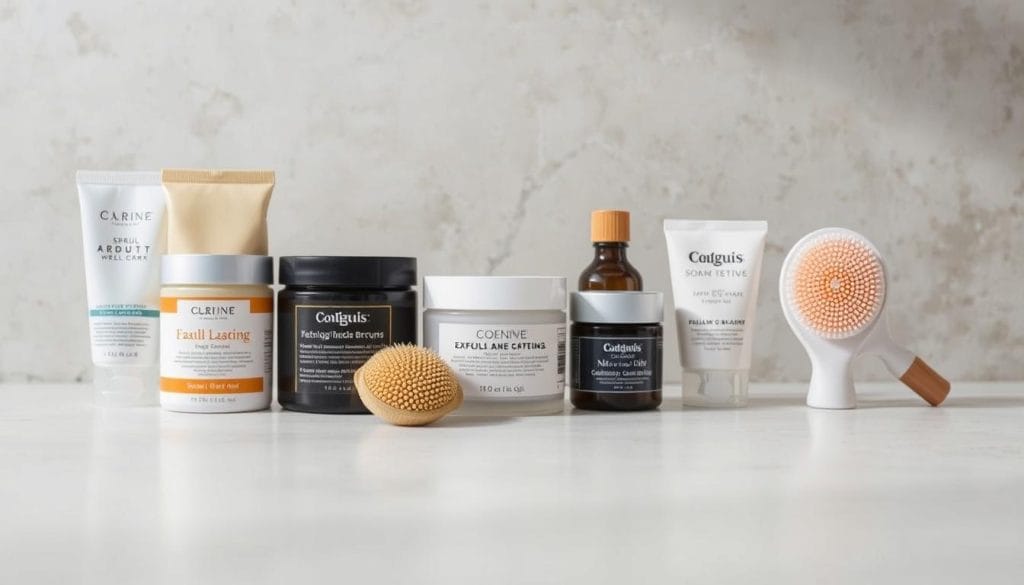
Match your skin type to a targeted formula to clear pores and smooth dead skin safely.
Sensitive or dry skin
Use gentler AHAs such as lactic acid or low-strength glycolic acid with short contact times. These acids smooth texture while minimizing irritation.
Start with a leave-on product once weekly and watch how your skin responds before increasing frequency.
Oily or acne-prone skin
Salicylic acid (a BHA) penetrates into pores to clear oil and help reduce breakouts without excessive surface stripping. Choose lightweight gels or leave-on toners for targeted use.
Physical vs. chemical methods
Physical scrubs can help on rough patches or T-zone buildup but may abrade fragile areas. Chemical acids work more uniformly across the face.
Avoid mixing both on the same day to limit cumulative stress and risk of irritation.
Label reading 101
Scan ingredient lists for names like glycolic acid and salicylic acid across cleansers, toners, and serums so you don’t double up unknowingly.
- Start with one category: pick an AHA or a BHA and stick with one leave-on product to gauge tolerance.
- Pick textures that fit your goals: liquids for even coverage, mild gels or lotions for control.
- Patch test: try new products behind the ear or along the jawline before full-face use.
Less frequent use with the right match often beats frequent use with a poor match — clearer pores and smoother texture follow patience.
How to reintroduce exfoliating—step by step
Start the reintroduction phase with patience: one mild session a week lets you see how skin responds.
Week-by-week plan
Week 1: pick one low-strength product and use it once. Keep contact time short and follow with a rich moisturizer.
Week 2: try an alternate category. Use a gentle glycolic acid one week, then salicylic acid the next to compare tolerance.
Give several days between sessions so the barrier can show any reaction.
When to pause and when to call a dermatologist
- If redness, peeling, or tingling returns, stop for several days and simplify your regimen.
- Use small amounts of product and avoid layering multiple exfoliants on the same day.
- If worsened breakouts, long-lasting stinging, or persistent sensitivity occur, seek professional care promptly.
“Slow, consistent steps beat fast fixes — let your skin set the pace.”
Conclusion
Balance matters: steady care beats frequent intense treatments when protecting your skin’s outer layer. Keep your skincare routine simple, watch for key signs like lingering redness, bumps, or a waxy shine, and pause if irritation appears.
Let skin cells renew on their own schedule and support the barrier with a gentle cleanser, a nourishing cream or balm, and ingredients that restore natural oils and lock in water. Reintroduce any acid or active product slowly, one product at a time, and track how your skin responds over a few weeks.
If dry skin, persistent stinging, or increased breakouts continue despite careful changes, consult a dermatologist. Patience and a measured regimen protect results and keep pores clear while preventing lasting damage.
FAQ
Why should I stop exfoliating my face if it feels smooth?
Smoothness can hide damage. Removing too many dead skin cells strips natural oils and weakens the stratum corneum, so moisture escapes and irritation follows. Pause active scrubs and acids to let the lipid layer repair and reduce transepidermal water loss (TEWL).
What does exfoliation actually do to the skin barrier?
It lifts dead skin and speeds cell turnover, which helps texture and absorption. But strong acids or abrasive scrubs can disrupt the lipid matrix and corneocyte cohesion. That breakdown reduces barrier function and raises TEWL, causing dryness, sensitivity, and inflammation.
How do physical scrubs differ from chemical acids like AHAs, BHAs, and PHAs?
Physical scrubs rely on friction to remove cells; chemicals loosen bonds between cells. AHAs (glycolic, lactic) mainly target surface texture, BHAs (salicylic acid) penetrate pores, and PHAs offer gentler, larger-molecule exfoliation for sensitive skin. Choose based on tolerance and concern.
What are common signs my skin barrier is damaged?
Look for redness, persistent stinging, tightness, flaking, and increased sensitivity to normal products. You may also see oil rebound with clogged pores, more breakouts, a shiny-but-dehydrated appearance, or worsened texture and bumps.
Which daily products can secretly act as exfoliants and cause problems?
Some cleansers, toners, and acne formulas contain acids or enzymes. Fragrance, alcohol-heavy foaming cleansers, and multiple combined actives (retinoids plus acids) can stack effects. Check labels for glycolic, salicylic, lactic, mandelic, and fruit enzymes.
What should I stop using immediately if my skin is irritated and flaky?
Halt physical scrubs, retinoids, strong AHAs/BHAs, fragranced serums, and foaming cleansers. Avoid any product that causes burning. Simplify to a gentle, non-foaming cleanser, a fragrance-free moisturizer, and sunscreen in the daytime.
What quick treatments help soothe and repair barrier damage?
Use a cold compress for acute stinging, apply an occlusive moisturizer or balm to lock in hydration, and choose products with ceramides, cholesterol, and fatty acids. Short-term 1% hydrocortisone can calm severe inflammation, but consult a dermatologist before prolonged use.
How often is safe to exfoliate once my skin recovers?
Start low: once weekly and watch reactions. For tolerant skin, 2–3 times weekly of a mild chemical or gentle physical method may work. Sensitive or dry skin should stick to once every 7–10 days and favor low-strength AHAs or PHAs.
Which exfoliant is best for dry or sensitive skin?
Lactic acid at low concentration or PHAs offer gentle resurfacing with less irritation. Short contact times and lower frequency reduce risk. Avoid high-strength glycolic peels and abrasive scrubs until barrier function is solid.
Which acid should oily or acne-prone skin consider?
Salicylic acid (BHA) dissolves oil and clears pore congestion. Use leave-on products at appropriate strengths and avoid pairing with strong AHAs or retinoids on the same day to prevent overstripping and increased sensitivity.
Can I mix physical exfoliation with chemical acids?
Mixing on the same day often increases irritation and barrier damage. If you want both, separate them by days—mechanical once a week and a low-strength chemical on alternate days—while monitoring skin response closely.
How do I read labels to spot acids and prevent stacking actives?
Scan ingredient lists for glycolic, lactic, mandelic, salicylic, gluconolactone, and fruit enzymes. Also note retinoids, vitamin C formulations, and alcohol denat. Avoid using multiple products with active exfoliants in one routine.
What step‑by‑step plan helps reintroduce exfoliation safely?
Wait until redness and stinging resolve, then start with a single low-strength product once weekly. Track skin for two weeks, then increase to twice weekly if tolerated. Alternate AHA and BHA focus days rather than doubling up.
When should I pause exfoliating again or see a dermatologist?
Pause if irritation returns, if flaking or stinging resumes, or if you develop open sores. See a dermatologist for severe inflammation, persistent TEWL, or if topical steroids are needed beyond a short course.
Are there barrier-supporting ingredients I should add to my routine?
Yes—ceramides, niacinamide, glycerin, hyaluronic acid, squalane, and fatty acids like linoleic acid help restore lipids and hydration. Use fragrance-free creams and avoid unnecessary actives until the barrier heals.
How long does it take to repair a damaged skin barrier?
Mild irritation can improve in days with proper care; moderate barrier damage may take 2–6 weeks. Severe disruption or chronic sensitivity can take longer and may require professional guidance and prescription treatments.


