
Top 10 Comic Villains Fans Secretly Love

Expect a tight, data-backed list that celebrates complex antagonists and explains why readers keep returning to them over time.
This list balances legacy, pop culture impact, and memorable book moments by calling out defining series, key arcs, and iconic design choices. We’ll note facts like Shredder’s Mirage Comics origin and Joker’s many bizarre reinventions, while also citing extreme examples such as Carnage’s symbiote birth and Purple Man’s mind control.
Fans often “love” these figures for performance, design, or narrative role, not for endorsing their actions. Over the years, reinvention across formats — from animation to games — cements certain names as benchmarks in the world of storytelling.
Our methodology weighs series-defining arcs, adaptations, and the part each antagonist plays in elevating heroes like Captain America. Expect entries ranging from street-level killers to mind-bending manipulators, each with a clear, concise fact to anchor its placement.
Key Takeaways
- This list is research-driven and focused on narrative impact.
- Entries highlight design, performance, and defining story arcs.
- Reinvention across years and media shapes lasting appeal.
- We balance legacy with pop culture influence and series importance.
- “Love” here means fascination with a character’s role and craft.
Why We Love to Hate Supervillains: The Allure of Comic Book Antagonists
A great antagonist sharpens the stakes and forces the hero to choose who they must become. A clear threat reveals hidden rules in the world and makes moral choices concrete.
From menace to meme: how foes shape the story
A striking villain crystallizes a plot by testing the hero’s ideals. That pressure turns abstract themes into urgent action and gives scenes real consequences.
People remember the character who breaks rules because charisma and a singular modus operandi make menace repeatable. Over time, style and memorable lines turn danger into cultural shorthand.
The blurred line between evil, charisma, and cultural impact
Gotham’s dark knight mythology shows how a caped crusader grows with each antagonist. A foe’s worldview forces the hero to adapt, shaping long-term growth.
Psychologically, audiences study villains to inspect forbidden impulses and the mind’s rationalizations for control. Theaters of spectacle and ritual amplify fascination.
- Sharp themes: standout foes tighten plot momentum and can anchor cross-title arcs.
- Recognizable theatrics: iconography and dialogue make fear into fascination.
- Longevity: reimagining a character lets them mirror new anxieties while keeping their core.
| Role | Effect on Hero | Why People Remember |
|---|---|---|
| Ideological foil | Tests convictions | Clear moral contrast |
| Stylish menace | Raises spectacle | Memorable visuals and lines |
| Psychological threat | Probes the mind | Explores forbidden impulses |
| Long-running nemesis | Shapes legacy | Repeated reinvention |
What we love to hate is the audacity — the way a villain breaks rules and, in doing so, expands the limits of the story itself. Time after time, that presence turns any page into an event.
How This List Was Chosen: Legacy, Power, and Pop Culture Staying Power
Our list highlights antagonists who changed stories at the most crucial moments. Each entry earned its place through clear impact on plot, hero growth, and the wider world.
We weighed endurance over years and the practical role a figure plays in shaping a series. Power meant more than strength. Strategy, resources, and the exact point where a character alters a book or a hero’s path all counted.
Cross-media reach matters. If an antagonist became larger in animation, film, or games, that amplified cultural footprint and kept them in public time. We also favored adaptability — creatives must update a figure without erasing core identity.
- Signature stories: iconic arcs and defining confrontations.
- Design & dialogue: visual iconography and lines that return in memory.
- Event potential: ability to headline or pivot multiple titles and affect the hero’s arc.
| Criteria | Why it matters | Sample metric | Impact on hero |
|---|---|---|---|
| Endurance | Stays relevant across eras | Issue count, reboots | Shapes legacy |
| Influence | Cross-media amplification | Adaptations, mentions | Widens stakes |
| Signature moments | Defines a turning point | Iconic arcs | Alters character arc |
| Design & voice | Memorable look and lines | Cosplay, quotes | Deepens rivalry |
This is a living assessment. As new stories land, the hierarchy can shift. Some choices balance fan affinity with objective markers, and the final list favors those who make the hero more than a man on a page — they make the hero a part of a larger myth.
The Joker: Chaos Crowned in Gotham’s Dark Knight Mythos
One name in Gotham instantly signals that the status quo is about to fracture. The Joker’s presence turns ordinary patrols into moral theater and forces the city to reckon with extremes.
From homicidal clown to political spectacle
The Joker’s arc blends slapstick grotesquerie with sudden, brutal death. A single run of pages can pivot from a carnival stunt to the murder of Jason Todd, then escalate into outlandish political theater — famously declaring the Joker an Iranian ambassador in a storyline that shocks by pairing farce with atrocity.
Animated reinventions feeding darker epics
The animated series era distilled the Joker into a cackling, theatrical threat. Those traits migrated into modern, layered portrayals that emphasize cunning over mere chaos. Each medium borrows and reshapes his tools: jokes, traps, and a penchant for spectacle.
Why readers stay fascinated
Fans relate because the Joker mirrors the caped crusader. He mocks rules, challenges ideals, and forces one batman to answer questions no other man can pose.
The character’s elasticity across media keeps his name fresh through time. His returns mark eras in the book, turning confrontations into tests that redefine Gotham’s moral map.
Green Goblin vs. Hobgoblin: The Osborn Legacy and Phil Urich’s Fractured Mask
A legacy of masks and broken names has made the Osborn line one of Spider-Man’s most persistent threats.
Norman Osborn in Amazing Spider-Man and the birth of a Marvel Comics archetype
Norman Osborn set the template in Amazing Spider-Man: a wealthy industrialist whose double life fused family drama with corporate menace.
His choices ripple across the series and force personal stakes into every encounter. The Green Goblin name became shorthand for corruption and theatrical cruelty.
Phil Urich’s descent: from “heroic goblin” to Hobgoblin with a firesword
Phil Urich, nephew of reporter Ben Urich, first tried to be a heroic Green Goblin after exposure to the Goblin formula.
He retired, then snapped and returned as Hobgoblin, wielding a firesword and an unhinged laugh. That turn dramatizes how a name can warp a man.
Why Spider-Man’s goblins endure: power, family, and fear
The goblins blend tech—flight rigs and explosives—with psychological warfare that targets Peter Parker’s closest bonds.
Mask, legacy, and lineage make each new wearer a commentary on inheritance and decay. The name carries generational baggage that writers use again and again.
“One mask lets private pain become public terror; the Goblin identity externalizes inner fracture.”
| Aspect | Norman Osborn | Phil Urich |
|---|---|---|
| Origin | Industrialist, family power | Reporter’s nephew, exposed to formula |
| Style | Strategic, theatrical menace | Erratic, firesword-wielding Hobgoblin |
| Impact on Spider-Man | Defines long-term rivalry | Shows failed redemption and psychological collapse |
| Narrative value | Archetype for future characters | Illustrates the cost of a tainted name |
Conclusion: The Green Goblin and Hobgoblin endure because their power is as much narrative as technological. They turn fights into moral reckonings and keep the series focused on family, reputation, and fear.
Carnage: Symbiote Terror That Redefined Spider-Man’s Rogue Gallery
When a remorseless killer merges with an alien symbiote, the result tears through moral norms and forces heroes to improvise.
Cletus Kasady was already a broken man. Bonded to an offspring of Eddie Brock’s alien, he became a living weapon whose violence overwhelmed standard responses.
Cletus Kasady’s psyche amplified
The prison origin links Eddie Brock, the symbiote offspring, and Kasady’s transformation. A man who once killed without remorse now gains fluid, bladed powers that make him harder to stop.
Maximum Carnage and red-letter moments
Maximum Carnage turned New York into a horror arena. The mass deaths and chaos forced Spider-Man and fellow heroes into uneasy alliances and brutal choices.
| Aspect | Origin | Effect |
|---|---|---|
| Powers | Symbiote offspring | Shape-shifted blades, tendrils, resilience |
| Motive | Psychopathic urge | Unbounded violence |
| Story impact | Prison breakout | Cross-title emergencies |
Carnage asks whether a hero can show mercy when a killer’s life means more death. In the amazing spider-man era and across the marvel universe, his returns mark vital parts of the mythos.
“He forces heroes to choose tactics they swore they’d never use.”
Shredder: The Samurai-Armored Nemesis of the Teenage Mutant Ninja Turtles
Shredder’s blend of samurai discipline and theatrical menace made him a focal point of Teenage Mutant Ninja storytelling. Oroku Saki began in Mirage as a revenge-driven leader of the Foot Clan, and that origin set a long-term tone for conflict.
Oroku Saki, the Foot Clan, and Mirage to animated series evolutions
Mirage introduced a calculated, human threat who fell and returned in shocking ways — mystic worm resurrection and later monstrous forms kept the feud alive. Animation expanded his backstory, including the Utrom Ch’rell angle that reframed motives and added layers to his role.
Cheese grater to cape: the iconic armor and mask design
Kevin Eastman’s “cheese grater” idea created a silhouette that reads instantly in any medium. The spiked armor, cape, and face-obscuring mask give immediate visual power, which made Shredder a go-to final boss in classic video games.
Why he endures: disciplined martial skill and tactical leadership force the ninja turtles to unite and adapt. The Foot Clan acts as army and ideology, and each return retools the rivalry for a new generation.
Purple Man: Mind Over Matter in the Marvel Universe
Some threats don’t explode — they quietly erase choice, and Zebidiah Killgrave is the darkest example.
Zebidiah Killgrave’s power of suggestion and its horrific cost
Once a spy, Killgrave survived a nerve gas prototype that turned his skin purple and gave him absolute suggestion. His ability forces people to obey, making ordinary crowds into unwilling tools.
That single power reframes what counts as strength. No weapon can match a voice that steals consent. The result is intimate terror: simple interactions become life-changing violations.
From Daredevil to Jessica Jones: a villain who gets under the skin
Early clashes with Daredevil showed how street-level heroes struggle when autonomy collapses. Rules like arrest and due process break down when victims act under command.
The Jessica Jones arc is his darkest legacy. He dominated her life, leaving long-term trauma and a story about recovery that still unsettles readers.
“He doesn’t need to fight; he needs only to speak.”
Why he endures: Purple Man targets the mind, not the body, which leaves scars that outlast any battle. His presence makes the marvel comics world feel more human in its fears and forces heroes to face moral ambiguity when justice cannot simply be enforced.
Mr. Zsasz: Gotham’s Grim Tally of the Human Killer Instinct
Mr. Zsasz strips menace to its core: no gadgets, no grand schemes—only a compulsion that turns a body into a ledger of loss.
He carves tally marks into his skin to record each death, a ritual that visualizes his worldview. Those marks make the villain unmistakable and force the dark knight to face cruelty without theatrics.
Zsasz stories often hinge on time pressure. Hostages and rising counts drive breathless pacing. The urgency highlights procedural work over spectacle.
Detectives and street-level allies confront him differently than they do masked masterminds. Their tactics lean on method and containment, not dramatic takedowns.
“He punctures any illusion of control; every mark is a permanent reminder that some evils resist reason.”
| Aspect | How Zsasz Operates | Narrative Effect |
|---|---|---|
| Method | Close-range killings, tally ritual | Intimate terror, personal stakes |
| Conflict | Time-sensitive hostage scenarios | Relentless pacing, moral pressure |
| Legacy | Recurring street-level threat | Defines an era of grim tone in Gotham |
Across years, the name Zsasz became shorthand for a tonal extreme. He refracts Batman’s mission through the rawest form of the killer instinct: one man, one knife, one tally at a time.
Mad Hatter: Wonderland Obsession Meets Mind Control in Batman’s World
Jervis Tetch turns childhood fantasy into a predator’s script, where tea-party whimsy masks coercive intent.
The character has been reshaped over the years, from an abductor seeking a mythical “Alice” to iterations that lean either pathetic or vicious. Each new version shifts tone and keeps the core obsession intact.
Jervis Tetch’s evolving portrayals from comics to animated series
The animated series gave a visually simpler but influential take that emphasized mood over gore. Comics and modern runs explored deeper tech and more invasive mind-control methods.
Mind-control tech serves both as a plot engine and as a symbol of violated autonomy. Tetch’s methods often erase identity, turning victims into props for his story.
Batman counters with detective work, careful rescue of manipulated victims, and targeted disruption of control networks rather than brute force. Those responses highlight Gotham’s moral and mental-health divides.
“Where fantasy ends and abuse begins”—Tetch stories force that question on readers and the city alike.
- Why he endures: the clash of fairy-tale imagery and real-world harm makes his appearances linger in the series and the wider world.
Kevin of Sin City: Quiet Horror in Black-and-White Panels
A hush in black-and-white can be louder than any scream when the wrong person fills it.
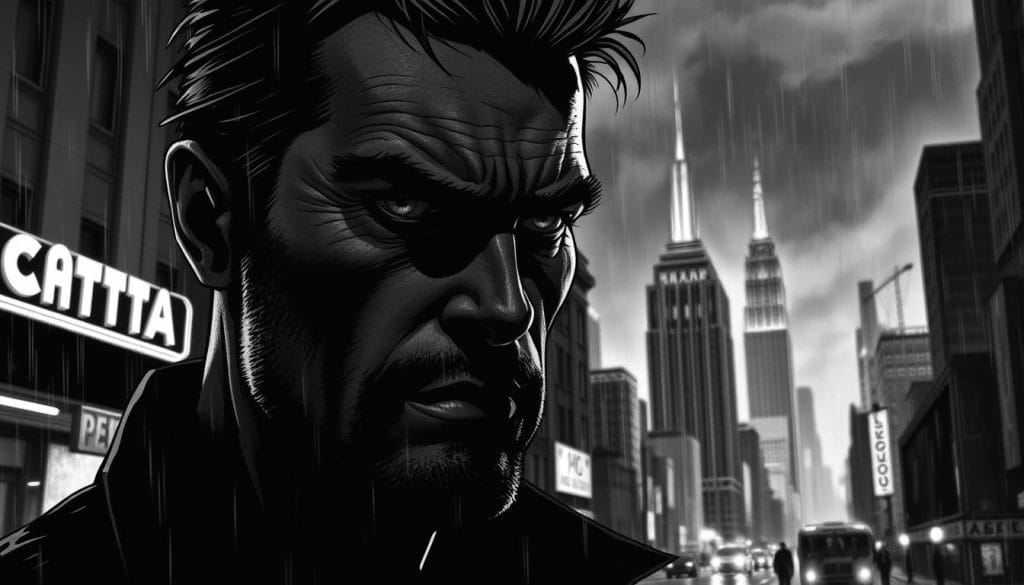
Cannibal killer, painlessness, and unforgettable confrontations
Kevin is a cold, efficient killer whose silence becomes predatory in Frank Miller’s stark pages. His blank affect unsettles readers more than any rant; he is a void where empathy should be.
He moves with light, unhurried speed and a weird painlessness that makes him feel almost superhuman within a grounded book. That calm makes each encounter feel inevitable.
The Goldie murder marks a point of no return. Marv’s pursuit turns into a brutal morality play where justice and revenge blur in Basin City’s corrupt life-and-death calculus.
- Traits: preternatural speed, blank affect, efficient violence.
- Iconic moment: dismemberment and wolves as grim punctuation.
- Legacy: Kevin defines a part of Sin City’s identity.
“He is a cautionary figure: a man without a trace of conscience.”
At the end, Kevin endures not for what he says, but for the silence he leaves behind — a study in negative-space horror that haunts the world of the book.
The Governor: Walking Dead’s Toxic Charisma in a Lawless World
In a collapsed society, one leader’s calm cruelty can become the most dangerous currency.
The Governor builds authority from fear and scarcity. He offers safety but prices it with obedience. That bargain bends whole groups until dissent looks like a threat.
Power, fear, and the long game of a post-apocalyptic antagonist
Long view tactics: he waits, watches, and then strikes. Turning survival time into a weapon lets him destabilize rivals before open battle.
Charisma masks cruelty: his charm consolidates followers and hides violent intent beneath promises of order. That makes his control feel inevitable.
“A name that lasts years can haunt survivors more than a single massacre.”
| Aspect | How it works | Narrative effect |
|---|---|---|
| Authority source | Fear, resources, staged protection | Group compliance, moral erosion |
| Long game | Patience, plotting, surprise attacks | Shifts power balance over time |
| Legacy | Return after defeat | Years-long trauma and altered roles |
The Governor shows how a single man can reshape a community’s life. His name becomes a part of survivors’ stories and a mirror for how groups fracture under pressure.
comic villains Who Deserved More Spotlight
Some antagonists carry untapped narrative weight — names that can shift a hero’s world if given room to breathe.
Atomic Skull vs. the Man of Steel: tragic origins, radioactive power
Albert Michaels’ burned face and radioactive blasts give him the raw power to threaten Superman. His tragic origin reads like a mirror to the hero, yet he’s rarely given marquee arcs opposite the man steel.
Doctor Alchemy and the Philosopher’s Stone against the Flash
Albert Desmond’s upgrade from Mr. Element to Doctor Alchemy grants instant matter transmutation. That ability can rewrite battlefields and change a single book’s stakes in an issue.
Mr. Bloom’s seeds of control in Gotham
Mr. Bloom’s seeds hand out powers at the cost of autonomy and often death. The seeds are a chilling metaphor for shortcuts that erase free will and create living tragedies.
Shadow Thief, Johnny Sorrow, and Chemo
Shadow Thief became literal darkness with dimensional travel and shadow weapons — ideal for heists and nightmares alike. Johnny Sorrow brings eldritch dread: a mask that kills on reveal. Chemo is a walking toxic catastrophe whose body count demands event-level attention.
Conclusion: Each name here has the raw tools to headline a series or reshape the world’s power map. Editorial focus often recycles familiar headliners; giving these figures time would diversify threats and deepen long-term storytelling.
From Panels to Screens: How Animation and Live-Action Shaped Fan Favorites
Screen adaptations translate pages into sound and motion, making certain traits impossible to forget. That shift matters because sight and sound fix a character’s silhouette, cadence, and core motive for mass audiences.
Teenage Mutant lore shows this clearly. The 1980s animated series introduced many viewers to Shredder and reframed origins—sometimes leaning into the Utrom Ch’rell angle to suit different audiences.
Repeated video game finales and boss stages made Shredder a household nemesis. Readable armor, clear attack patterns, and climactic fights reinforced his status beyond the page.
Meanwhile, Batman: The Animated Series rewrote expectations for Gotham’s rogues. Episodes polished the Joker’s operatic cruelty and gave the Mad Hatter a tragic voice. Those portrayals deepened the characters’ pathos and menace.
Animation often streamlines backstories, making a few beats definitive. That selective clarity helps characters cross into film, toys, and crossover cameos, carrying reputations to people who never read the originals.
“The right series can reauthor a villain’s role in culture, shaping expectations for every future portrayal.”
- Adaptations codify voices and silhouettes.
- Cross-media exposure expands a character’s world and role.
- Successful runs can revive print interest and shape legacy (from green goblin to captain america foes).
Power Sets, Psychology, and the “Relatable Villain” Effect
Power and planning define whether a threat is a sudden storm or a slow-rolling siege.
Raw powers—flight, matter control, or brute strength—change action tempo. Big abilities make battles cinematic and immediate.
By contrast, strategic ability turns conflict into a chess match. A cunning man with modest means can outmaneuver a stronger foe and force longer, smarter stories.
The mind behind a plan matters. Motives like grief, control, or nihilism make characters disturbingly relatable to people.
A well-drawn antagonist doesn’t convince readers they are right. Instead, they reveal fractures anyone might face under pressure.
“The most enduring supervillains weaponize universal fears—loss, insignificance, betrayal—into sweeping schemes.”
Limits define drama. Powers that need proximity, fuel, or choice create natural points of tension. Those constraints give heroes leverage and create meaningful trade-offs.
Empathy raises the stakes. Understanding a foe can make the hero’s choice feel heavier and the outcome more consequential.
- World-building: followers, tech, and myths extend a threat even when the man is off the page.
- Team vs. solo: some antagonists thrive in ensemble books; others demand intimate, character-driven spots.
- Reader investment: shifting power levels and moral tests keep people returning across arcs.
Conclusion: When capacity and psychology align, a threat stops being just dangerous and becomes classic — a part of the world readers remember long after a single point of conflict has passed.
Marvel Comics vs. DC Comics: Different Schools of Supervillainy
Storytelling instincts at each house pushed certain types of threats forward. That choice shapes how readers see danger and what a hero must become to respond.
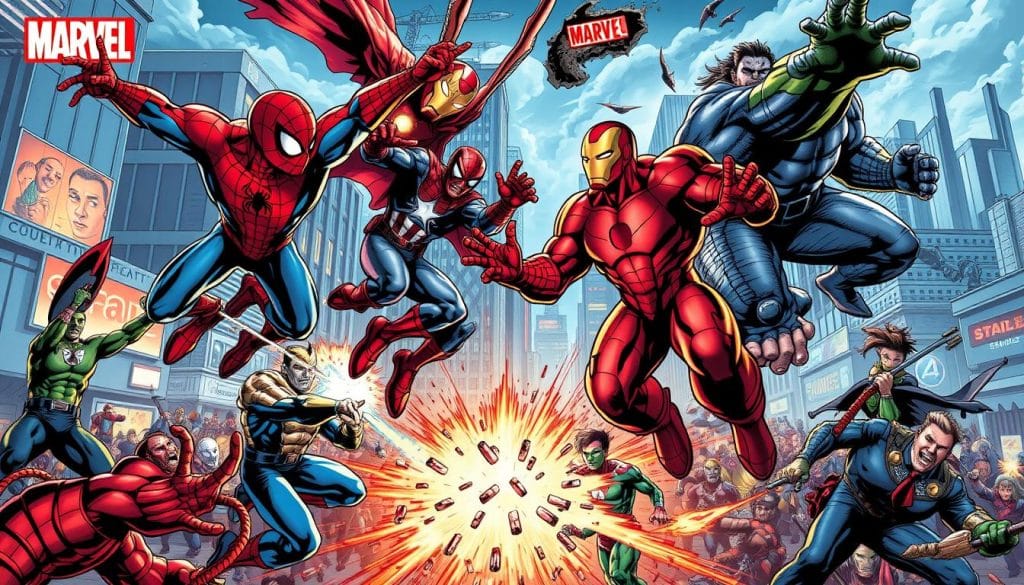
Grand schemers, killer clowns, and cosmic horror on the DC side
DC often builds foes as archetypes: grand schemers, killer clowns, and eldritch nightmares that define cities for years.
Those figures read as myths. They give the city a lasting identity and let a single character cast a long shadow over an entire world.
Street-level menace to universe-spanning threats in Marvel
The marvel universe tends to anchor conflict in personal history. A broken family, a betrayal, or a private grudge can bloom into citywide danger.
That approach makes some supervillains feel like everyday threats to a hero. For example, captain america faces ideological foes, while Spider-Man’s green goblin arc centers on family and betrayal.
“Both schools produce classics; the difference is where a fight begins — street, city, or cosmos.”
| House | Tonal focus | Typical target |
|---|---|---|
| DC | Archetype, spectacle | City legacy |
| Marvel | Personal motive, grounded stakes | Individual hero’s life |
| Both | Reinvention over years | Event headliners and intimate arcs |
The Role of Time: Decades of Reinvention, New Takes, and Lasting Names
Decades let creators press and rewind a foe’s motives until the essential conflict rings true. Over years, each retelling tests a character’s core and exposes what must remain.
Long-running series give writers room to shift tone. A figure can move from camp to horror, or from thug to mastermind, without losing identity.
Continuity makes callbacks meaningful. A single echo across years deepens a name into a symbol that carries weight in any new chapter.
The way a villain dies, returns, or evolves often becomes part of the legend. That ritual can be as defining as any battle or death.
The outside world reshapes tactics and powers. Cultural trends, tech advances, and changing readers alter a foe’s look, gear, and threats in-universe.
“Time rewards elasticity: the best antagonists survive reinterpretation because their core conflict is elemental.”
- Publishing cycles create windows for bold changes.
- Retrospectives and lists keep reevaluating who matters most.
- Reinvention often strips nonessentials and clarifies the point of a character.
In the end, durable names endure because they still spark anticipation when solicits drop, decades into a series’ life.
Conclusion
The most memorable foes give a hero a mirror and a challenge that lasts across eras.
These villains endure because they crystallize tensions people recognize, evolving over time while keeping a sharp identity. The best entries balance spectacle and psychology: raw power and uncanny ability sit beside motives we can understand but never condone.
Marquee conflicts force a hero to redefine values, and years of rematches make each return feel loaded with history. Adaptations and comic book milestones keep key names alive, guiding new readers to essential issues and creators.
Deaths, returns, and reinventions become narrative pivots that test homage versus novelty. We didn’t rank shock alone — we honored characters who rewired the story and why it matters.
Keep the conversation going: who did we miss that deserves a spot the next time this list returns?
FAQ
What criteria determined the "Top 10 Comic Villains Fans Secretly Love" list?
The list prioritizes legacy, cultural impact, consistent storytelling, and memorable power sets. We weighed long-term influence across comics, animation, and live-action adaptations, along with how well a character challenges heroes and resonates with audiences.
Why do many readers find antagonists more compelling than heroes?
Antagonists often offer complexity: moral ambiguity, charisma, and narrative unpredictability. Their choices reveal flaws in protagonists, push stakes higher, and create memorable conflicts that stick with readers beyond a single issue or episode.
How did you balance portrayals from comics, animated series, and live-action when ranking characters?
Rankings reflect a character’s cumulative presence across media. We considered definitive comic arcs, standout animated interpretations, and major film or television portrayals to assess lasting recognition and influence.
The Joker appears prominently—what aspects make him a lasting figure in Batman lore?
His unpredictability, dark humor, and mythic rivalry with Batman create a powerful dramatic foil. Iconic portrayals in graphic novels, animation, and film have expanded his psychological range while keeping chaos central to his appeal.
How did the Osborn legacy shape Spider-Man’s rogues gallery?
Norman Osborn introduced a mix of corporate menace and personal betrayal that redefined Spider-Man’s stakes. Legacy characters like Hobgoblin and Phil Urich explore family, identity, and the corrosive effects of power in Spider-Man stories.
What made Carnage a turning point for symbiote stories?
Carnage amplified the horror element by combining a serial killer’s psyche with a living alien bond. Major crossovers like Maximum Carnage cemented him as a visceral, unpredictable threat distinct from other symbiotes.
Why does Shredder remain central to Teenage Mutant Ninja Turtles across versions?
Oroku Saki anchors the turtles’ origin with a personal vendetta and the Foot Clan’s threat. Design changes across Mirage comics, animated series, and films keep the character visually striking and narratively flexible.
How does Purple Man differ from other mind-control antagonists?
Zebediah Killgrave’s power of suggestion translates into intimate, often disturbing violations of agency. His appearances in Daredevil and Jessica Jones emphasize psychological harm and long-term consequences for survivors.
What distinguishes Mr. Zsasz within Gotham’s rogue gallery?
Mr. Zsasz is defined by a cold compulsion to mark victims with tally scars, embodying a human, methodical form of menace. He lacks grand schemes but presents a persistent, chilling danger grounded in realism.
How have lesser-known antagonists earned calls for more spotlight?
Characters like Atomic Skull, Doctor Alchemy, and Johnny Sorrow have rich backstories and distinctive powers that rarely receive full exploration. Fans and creators often cite their untapped potential for modern reinterpretation and deeper narratives.
What role has time played in keeping these antagonists relevant?
Decades of reinvention let writers reframe motives, update origins, and explore social themes. Continual reinterpretation across eras keeps characters relevant to new audiences while preserving core traits that define them.
How do Marvel and DC approaches to antagonists differ?
DC often leans into mythic, archetypal figures and grand scheming threats, while Marvel emphasizes flawed, humanized villains tied to street-level stakes or personal relationships. Both approaches create distinct but complementary types of dramatic tension.
Can a well-written antagonist generate sympathy from readers?
Yes. Nuanced motives, tragic origins, or believable psychology can elicit empathy without excusing harmful actions. That complexity enhances storytelling by forcing readers to confront uncomfortable truths about power and consequence.
Are there examples where animation or live-action improved a villain’s popularity?
Absolutely. Batman: The Animated Series elevated many Gotham foes with refined characterization and voice work, while Teenage Mutant Ninja Turtles adaptations reshaped Shredder for broader audiences. Strong performances and writing can redefine how a character is perceived.


